On January 12, 2026, SingleTree partners actively contributed to the Montagskolloquium at ETH Zürich, an event bringing together forest practitioners, researchers, industry representatives, and public institutions to discuss how value creation along the forest–wood supply chain can be sustainably secured and further developed.
The central question of the event was how long-term value creation can be ensured along the entire chain—from forest management and timber harvesting to industrial processing and end use. Contributions from research, practice, and administration offered complementary perspectives and provided valuable impulses for future development.
Although there was no dedicated presentation of the SingleTree project, the themes addressed during the event closely aligned with its core objectives: improving forest resilience, enhancing efficiency along the wood value chain, and leveraging digital technologies to support data-driven decision-making.
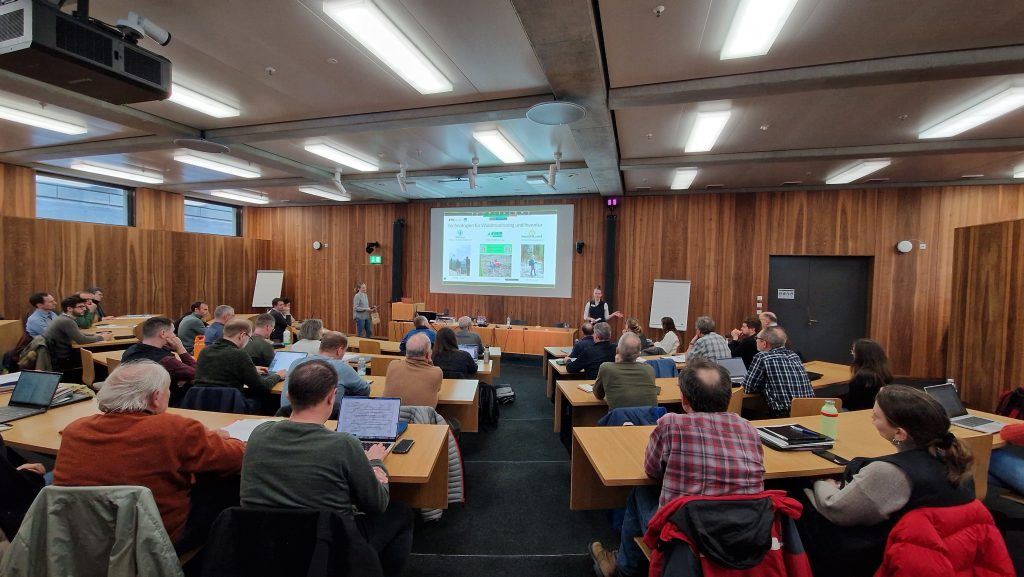
SingleTree partners contributing to the programme
Several SingleTree collaborators played an active role in the event. The session was hosted and moderated by SingleTree researchers together with colleagues from ETH Zürich, ensuring a strong link between scientific research and practical forestry challenges.
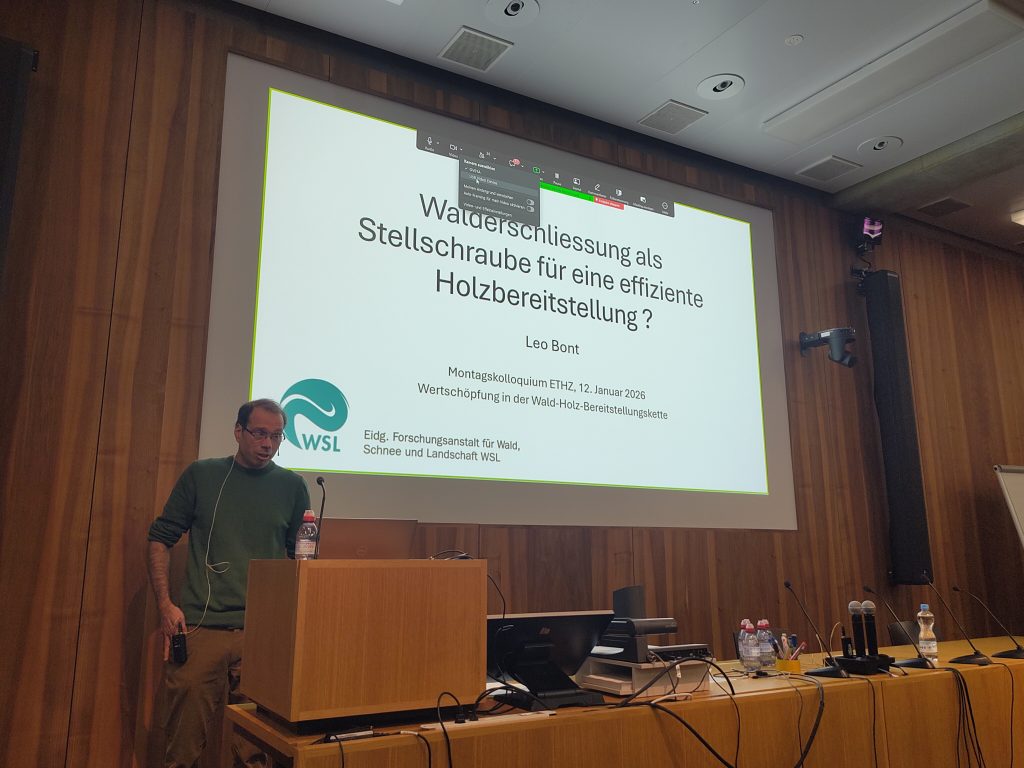
Leo Bont, working on the adaptive management of SingleTree project, delivered an oral presentation highlighting how the quality of forest access infrastructure directly affects the efficiency of timber supply. His contribution focused on untapped wood potentials—particularly in mountainous regions—and examined how road development, transport costs, and appropriate harvesting methods influence economic viability. Through concrete analyses and examples, he demonstrated how optimising existing access infrastructure and applying best-practice harvesting techniques can unlock additional timber resources.
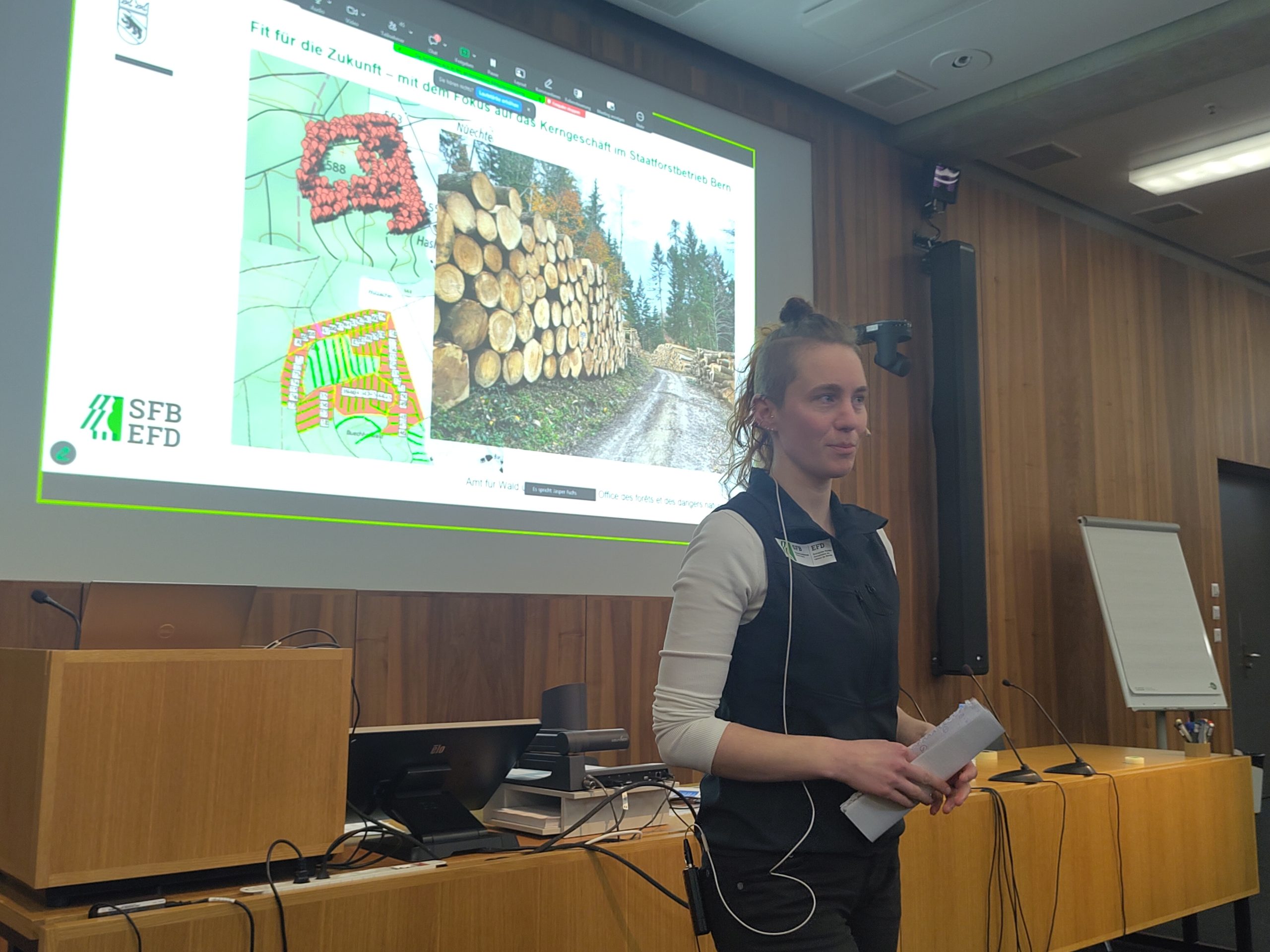
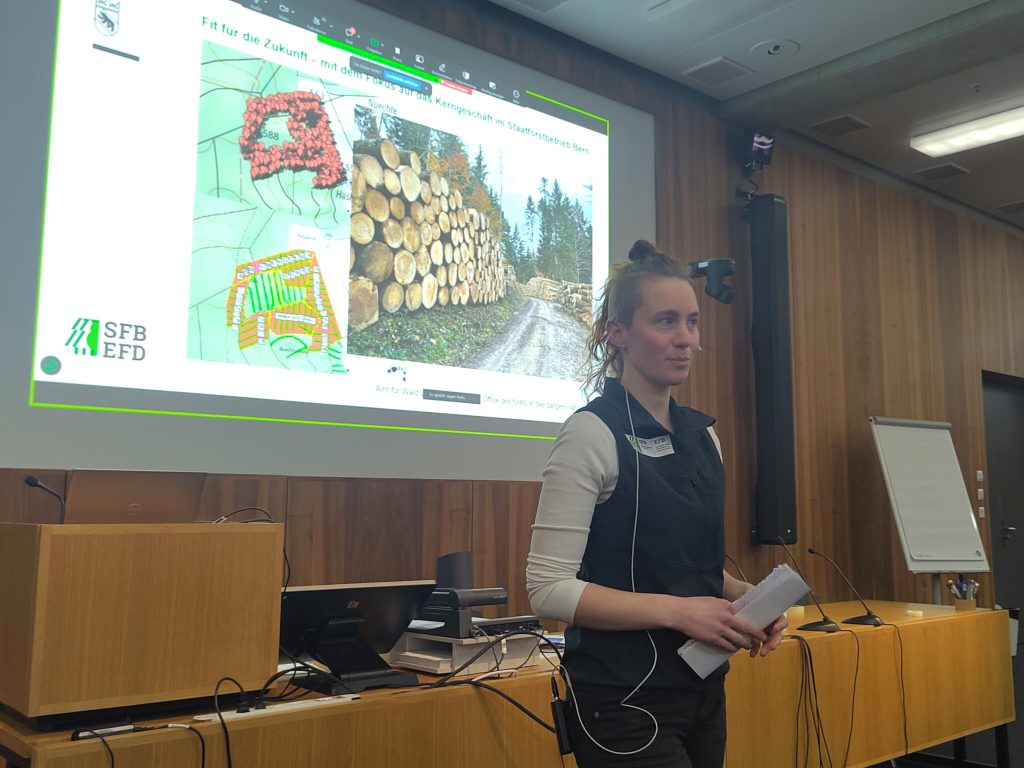
Lioba Rath, coordinator of Living Lab Central, presented how the State Forest Enterprise Bern is preparing for the future by focusing on its core business. Her talk emphasised the importance of transparent objectives, consistent forest management concepts, efficient planning processes, and market-oriented timber production as key elements for resilient and forward-looking forest enterprises.
Innovation showcased
A highlight of the event was the coffee break, which offered participants hands-on insights into state-of-the-art technologies for forest data collection. Contributions from the Upscale, Digiforest, and Small4Good projects demonstrated how modern tools—such as drones and digital sensing technologies—can support forest planning and management. Practitioners had the opportunity to interact directly with these technologies and discuss their practical application in real-world forestry contexts.
Connecting research, practice, and digital innovation
The Montagskolloquium clearly demonstrated the value of exchange between research, practitioners, and industry. It reinforced the importance of integrated, data-driven approaches to strengthen the forest–wood value chain—an approach that lies at the heart of the SingleTree project.
The presentations from the event are available online and invite further discussion here (see Kolloquium, January 12)
Events like this underline how collaborative dialogue and innovation are essential for shaping a sustainable and resilient future for Europe’s forests.